John Case has sent you a link to a blog:
Blog: Enlighten Radio
Post: The Poetry Show -- June 19, 2017
Link: http://www.enlightenradio.org/2017/06/the-poetry-show-june-19-2017.html
--
Powered by Blogger
https://www.blogger.com/
Monday, June 19, 2017

Monday, June 5, 2017
Enlighten Radio: The Poetry Show, Storytelling with Fanny and Stas,...
Enlighten Radio: The Poetry Show, Storytelling with Fanny and Stas,...: Monday, June 5, 2017 Lineup for Enlighten Radio 7:30 The Poetry show with Janet Harrison. Poet of the week is Chana Bloch. Noo...
The poetry show: Monday's poet is Chana Bloch
www.enlightenradio.org
Chana Bloch was born on March 15, 1940 in the Bronx, New York and died recently on May 19, 2017 in Berkeley, California. Her parents were Jews who had emigrated from Eastern Europe. She earned a B.A. from Cornell University, a M.A. in English literature and Judaic studies from Brandeis University, and Ph.D. from the University of California-Berkeley. She wrote her doctoral dissertation on the poetry of George Herbert, an Anglican minister, an unusual choice perhaps for a young Jewish scholar. She later published a book on Herbert, Spelling the Word: George Herbert and the Bible. Her five collections of poetry are The Secrets of the Tribe (Sheep Meadow Press, 1981), The Past Keeps Changing (Sheep Meadow Press, 1992), Mrs. Dumpty (University of Wisconsin Press, 1998), Blood Honey (Autumn House Press, 2009), Swimming in the Rain: New and Selected Poems (Autumn House Press, 2015). A sixth volume, The Moon Is Almost Full is scheduled to be published posthumously in the fall of 2017. In addition to her critical studies and original poetry, Chana Bloch also published translations from the Hebrew and Yiddish, including works by Israeli poets Yehuda Amichai and Dahlia Ravikovitch, and a new version of the Song of Songs. From 1973-2005 she taught at Mills College, a women's college in Oakland, CA, where she also directed their creative writing program. Among her honors were two fellowships from the national Endowment for the Arts, one for poetry and one for translation, a fellowship from the National Endowment for the Humanities, and two Pushcart Prizes. For more information, see her website, www.chanabloch.com.When asked by Carol Dorf what she saw as her responsibilities as a poet, Bloch replied, "To tell the truth about life. Not to record the facts as a journalist, but to reach for a deeper truth with the power of the imagination. You bring many experiences together and make of them an amalgram that's richer, closer to the essential truth."This week's featured poem is "Alone on the Mountain," from Swimming in the Rain: New and Selected Poems 1980-2015 (Autumn House Press, 2015), originally published in The Past Keeps Changing (Sheep Meadow Press, 1992).ALONE ON THE MOUNTAINI climb up here onlyto feel small again. Blue liquorof distance: one sip and I start to losesize, anger, the sticky burrsof wanting. If only, what if—let the windcarry it away.Wave after wave of shadow comes overthe mountain, like some greatmigration. Up hereeverything's painted the fourbare colors: sky, cloud, rock, shadow.To be the object of so. much weather!I'm the only one left at the endof the last act. Everyone has died,or gone off to be married.Look how that treecatches the wind, strains like a kite againstits patch of sky. That'swhat I come for.An important cloudis making its way to some other mountain, to the sea,scattering finches like poppy seeds.Writing prompt:There is a crucial distinction between solitude and loneliness. (You may not agree; you could write about that.) Recall a time when you were by yourself, either lonely or solitary, and write about it. Blend in details of your physical surroundings.
Sunday, May 28, 2017
Enlighten Radio:Neruda odes, storytelling, Jane Austen on Monday
John Case has sent you a link to a blog:
Blog: Enlighten Radio
Post: Neruda odes, storytelling, Jane Austen on Monday
Link: http://www.enlightenradio.org/2017/05/neruda-odes-storytelling-jane-austen-on.html
--
Powered by Blogger
https://www.blogger.com/
Blog: Enlighten Radio
Post: Neruda odes, storytelling, Jane Austen on Monday
Link: http://www.enlightenradio.org/2017/05/neruda-odes-storytelling-jane-austen-on.html
--
Powered by Blogger
https://www.blogger.com/
Monday, May 22, 2017
Enlighten Radio: The Poetry Show features Nobel Poet Wislawa Szymbo...
Enlighten Radio: The Poetry Show features Nobel Poet Wislawa Szymbo...: Enlighten Radio -- May 22, 2017 Wislawa Szymborska was born on July 2, 1923 near Poznań in western Poland, but in 1931 her family moved to K...
Monday, May 8, 2017
Th Poetry Show Features Poetry of Samuel Hazo -- May 8,2017
Janet's notes on this podcast of the Poetry Show on Enlighten Radio, aired on May 8, 2017 in Shepherdstown, WV.
Download this episode (right click and save)
The son of Lebanese and Syrian immigrants, Samuel Hazo was born in Pittsburgh, Pennsylvania on July 19, 1928. After his mother died when he was only six years old, his aunt became the primary caretaker for his brother and him. In 1949 he graduated magna cum laude from the University of Notre Dame in South Bend, Indiana, and then enlisted in the Marine Corps, serving as a captain. Returning to Pittsburgh after his military service, he earned an M.A. from Duquesne University and a Ph.D. from the University of Pittsburgh. An extremely prolific writer, Samuel Hazo has published in many genres: novels, plays, essays, a memoir, a film script, and more than 30 books of poetry and translations. Among is recent publications in poetry are The Song of the Horse: A Selection of Poems 1958-2008 (Autumn House Press, 2008) and They Rule the World (Syracuse University Press, 2016). He founded the International Poetry Forum in 1966. The organization brought more than 800 poets and performers to Pittsburgh, including such luminaries as Seamus Heaney and Robert Pinsky. Additionally he taught English (1955-1998) and served as an associate Dean of the College of Arts and Sciences (1961-1966) at Duquesne University. In 1993, he was appointed poet laureate of Pennsylvania, a position he held for a decade. His poetry is both personal and political, and has been praised by poets such as Naomi Shihab Nye and Martín Espada.
Responding with approval to a remark a friend wrote to him in a letter, "Knowing is stifling; not knowing is creative," Hazo commented, "We live in a world obsessed with the ultimate value of information and the pursuit of the factual over the ambiguous, the obscure or the mysterious." He goes on to draw an important distinction between the language of communication (everything from conversation to journalism, from text messaging to expository prose) and the language of communion (poetic statements, the arts and literature). He states, "Life, however, is by nature not static. It is ultimately a mystery; it has more in common with what we cannot know than what we do know."
This week's featured poem, "Only the New Branches Bloom," is from Song of the Horse: A Selection of Poems from 1958-2008 (Autumn House Press, 2008).
ONLY THE NEW BRANCHES BLOOM
Denying what it means to doubt,
this year's forsythias unfold
and flood the air with yellow
answers.
They say it's time
I opened up, time I learned
French, time I liked less
and loved more, time
I listened to the sun, time
I made time.
Why not?
Can days of making sense
of days that make no sense
make sense?
If nothing's sure
but nothing's sure, then reading
Montesquieu must wait.
Preparing for my enemies must
wait.
And gravity the hurrier
must wait because forsythias
are happening.
They make me
turn my back on forts,
insurance policies, inoculations,
wire barbed or braided,
bodyguards and all that folderol
of fear.
They say that this
year's blossoms will outlive
the lasting death of Mars.
There are no flowers on the stars.
Enlighten Radio: Fwd: Monday's poet is Samuel Hazo
Enlighten Radio: Fwd: Monday's poet is Samuel Hazo: The Poetry Show -- May 8, 2017 -- Samuel Hazo with Janet Harrison The son of Lebanese and Syrian immigrants, Samuel Hazo was born in Pittsbu...
Thursday, May 4, 2017
The May Day Poetry Show -- Discussing Poet Jay Parini
The May Day Poetry Show was broadcast live on Enlighten Radio on Monday, May 1, 2017 in Harpers Ferry, WV. It features a discussion of poet Jay Parini and selections from his work.
Download this episode (right click and save)
Download this episode (right click and save)
Sunday, April 30, 2017
Monday's poet is Jay Parini
Jay Parini was born on April 2, 1948 in Pittston, Pennsylvania, and grew up in nearby Scranton. He graduated from Lafayette College in Easton, Pennsylvania in 1970 and five years later earned a doctorate from the University of St. Andrews in Scotland. While still living in Scotland, he published his first book of poetry, Singing in Time (1972). Upon returning to the United States, he taught at Dartmouth College from 1975 to 1982 before accepting the position that he currently holds: teaching English and Creative Writing at Middlebury College in Vermont. In addition to his six volumes of poetry, Jay Parini has published widely in other genres: biography and biographical fiction, novels, literary criticism, and journalism. He has also edited several volumes, including The Columbia History of American Poetry, The Columbia Anthology of American Poetry, and three Breadloaf anthologies (poetry, short stories, and essays). His biographical novel, The Last Station, a chronicle of the final months in the life of Leo Tolstoy, has been translated into more than thirty languages and was adapted into an academy nominated film. His traditional biographical works include volumes on Robert Frost, John Steinbeck, William Faulkner, Gore Vidal, and Jesus. Recently he has published a New and Collected Poems: 1975-2015 (Beacon Press, 2016), which includes selections from his previous collections Anthracite Country (Random House, 1982), Town Life (Henry Holt & Co., 1988), House of Days (Henry Holt & Co., 1998), and The Art of Subtraction: New and Selected Poems (George Braziller, 2005). For more information, see his website and blog at www.jayparini.com.In an interview with Paul Holler, Jay Parini explained, "I write because I like doing it. I can't wait to get out my notebook in the morning, and to start. I always begin the day by working on poetry. I love that moment, when I first open the blank page, and when I begin to hear the voice accumulating in my head, then transferring that energy to the page."This week's featured poem, "Hunch," from New and Collected Poems, 1975-2015 (Beacon Press, 2016), metaphorically captures some of that excitement.HUNCHI follow it, the snail of thoughtI leave the track, turn off this trailI crouch in shadows, under fernsI refuse to answer every birdI see the liquid glister in its shellI taste the windI smell the smoke of fire in the woodsI hear the crackle of a thousand thornsI feel the temperature risingI consider every option validI attend each phaseI crumble into wet, black groundI lose my place in sand and gravelI listen for the clash of weedsI wonder where the snail will go today
Sunday, April 23, 2017
The Poetry Show -- April 24 -- Lucia Perillo
The Poetry Show, hosted by Janet Harrison, is broadcast Mondays, 7:30 - 9:00 AM, EST, on EnlightenRadio.org
This week's featured poet is Lucia Perillo
Lucia Perillo was born in Manhattan on September 30, 1958 and died at her home in Olympia, Washington on October 16, 2016. The third child of a lawyer and a librarian, she grew up in Irvington, New York. She attended McGill University in Montreal and graduated with a degree in wildlife management. While working at the San Francisco Bay Wildlife Refuge, she took a class at San Jose State University taught by poet Robert Hass. After moving to Olympia, Washington, in the 1980s, she earned a Master's degree in English from Syracuse University. Her first book of poetry, Dangerous Life (Northeastern University Press, 1989) was a success, winning the Norma Farber First Book Award from the Poetry Society of America. However, before the book went to press, she was diagnosed with multiple sclerosis. Despite her illness, she continued to write and teach, publishing six subsequent collections of poetry: The Body Mutinies (Purdue University Press, 1996), The Oldest Map with the Name America: New and Selected Poems (Random House, 1999), Luck is Luck (Random House, 2005), Inseminating the Elephant (Copper Canyon Press, 2009), On the Spectrum of Possible Deaths (Copper Canyon Press, 2012), and Time Will Clean the Carcass Bones: Selected and New Poems (Copper Canyon Press, 2016). Additionally, she has published a collection of essays, I Hear the Vultures Singing (Trinity University Press, 2007) and a book of short stories, Happiness is a Chemical in the Brain (Norton, 2012). Her awards include the prestigious MacArthur Fellowship—the so-called genius award—and three Pushcart Prizes.
Responding to the famous Robert Frost quote that "writing free verse is like playing tennis with the net down," Perillo said: "but you also have to invent the shape of the ball and whether the paddle is going to be a fishing pole or a fly swatter. And then make up the rules of the game, what the ball bounces off of, etc." "The poem finds its form, and this is liberating but also a burden."
This week's featured poem is "Women Who Sleep on Stones" from Time Will Clean the Carcass Bones: Selected and New Poems (Copper Canyon Press, 2016), originally published in her second book, The Body Mutinies (Purdue University Press, 1996).
WOMEN WHO SLEEP ON STONES
Women who sleep on stones are like
brick houses that squat alone in cornfields.
They look weatherworn, solid, dusty,
torn screen sloughing from the window frames.
But at dusk a second-story light is always burning.
Used to be I loved nothing more
than spreading my blanket on high granite ledges
that collect good water in their hollows.
Stars came close without the trees
staring and rustling like damp underthings.
But doesn't the body foil what it loves best?
Now my hips creak and their blades are tender.
I can't rest on my back for fear of exposing
my gut to night creatures who might come along
and rip it open with a beak or hoof.
And if I sleep on my belly, pinning it down,
my breasts start puling like baby pigs
trapped under their slab of torpid mother.
Dark passes as I shift from side to side
to side, the blood pooling just above the bone.
Women who sleep on stones don't sleep.
They see the stars moving, the sunrise, the gnats
rising like a hairnet lifted from a waitress's head.
The next day they're sore all over and glad
for the ache: that's how stubborn they are.
John Case
Harpers Ferry, WV
Harpers Ferry, WV
The Winners and Losers Radio Show
7-9 AM Weekdays, The EPIC Radio Player Stream,
Sign UP HERE to get the Weekly Program Notes.
Check out Socialist Economics, the EPIC Radio website, and
Monday, April 17, 2017
Enlighten Radio: The Poetry Show -- Easter and Jane Hirshfield
Enlighten Radio: The Poetry Show -- Easter and Jane Hirshfield: Enlighten Radio Lineup -- Monday, April 17, 2017 Call in Line: 304-885-0708 Here is our player: 7:30 The Poetry Show -- J...
Subscribe to:
Posts (Atom)
The Poetry Show: July 16 2025
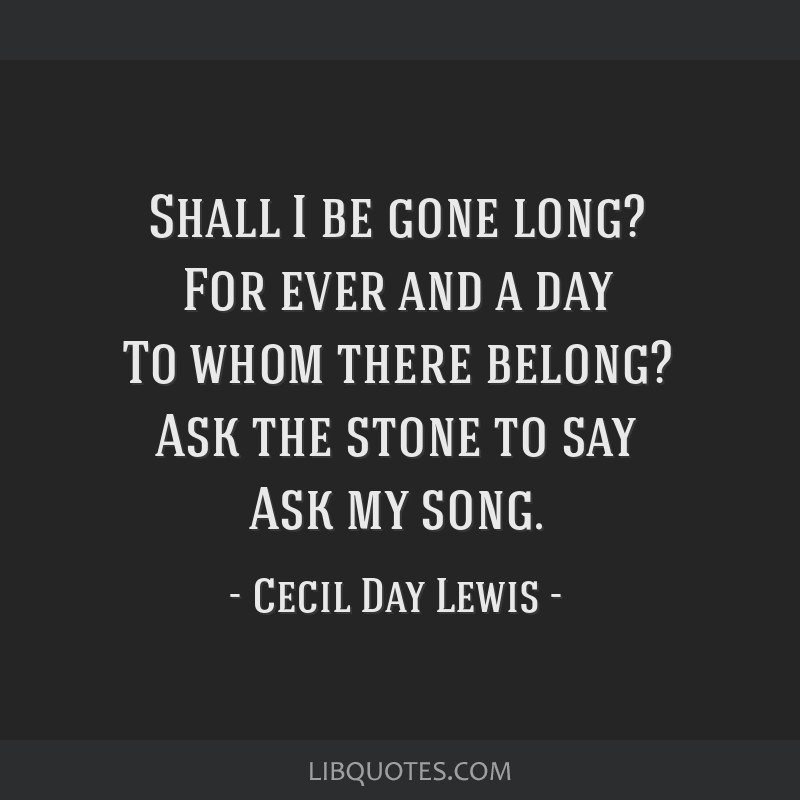
Enlighten Radio Presents A British Poet Gives Up Being an Astronaut. Cecil Day Lewis, Carol Ann Duffy, Ted Hughes, ...
-
Enlighten Radio Presents A British Poet Gives Up Being an Astronaut. Cecil Day Lewis, Carol Ann Duffy, Ted Hughes, ...
-
Enlighten Radio Podcasts: The Poetry Show: Moon Fishing : Enlighten Radio Presents: The Poetry Show Podcast Broadcast LIVE July 12, 2...
